
Abbas Kiarostami dedicated Five to Yasujiro Ozu. Could the five long shots that make up the film be an invitation to meditation, a bridge bringing the contemplative Iranian filmmaker closer to Japanese zen? The film raises more questions than it answers and what it speaks to us about is perhaps the filmic creation of the world’s passive-active tensions and the experience that it gives the spectator. Reality as an enigma, as cinema confirms, which gives any image a relative strength. After Taste of Cherry (whose final scene is the first that the filmmaker films using a handheld DV camera) and then more so after Ten, in Five, Kiarostami uses video to hijack cinema even more forcefully, and invents a place (the film locations not defined) where the filmmaker, poet and painter that he also was are brought together differently and made visible. Jérôme Baron
Five
(Panj)
- Iran
- 2003
- Documentaire
- Couleur
- 74′
- Persian
Présentations au festival

- Titre français
Five - Original title
Panj - Titre international
Five - Distribution
Diaphana
Read more
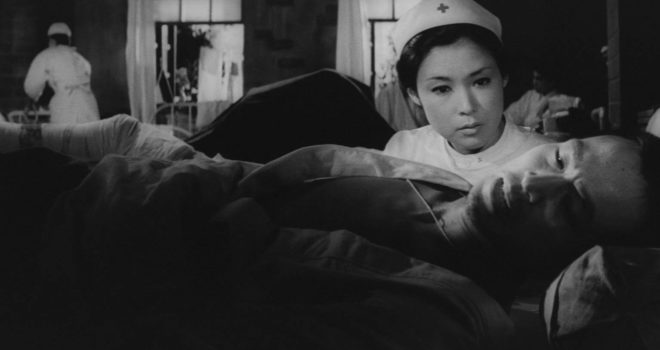
The Red Angel
(Akai tenshi)
by Yasuzô MASUMURA
Japan — 1966
Japan — 1966

Le Corbeau et un drôle de moineau
(Le Corbeau et un drôle de moineau)
by ABDOLLAH ALIMORAD, EBRAHIM FOROUZESH, MOHAMMAD-ALI SOLEYMANZADEH, MORTEZA AHADI SARKANI
Iran — 2007
Iran — 2007
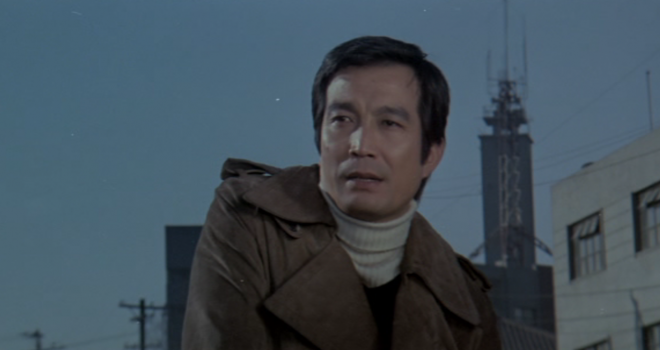
Wang Sib Ri, My Hometown, aka A Byegone Romance
(Wangsimni)
by IM Kwon-taek
South Korea — 1976
South Korea — 1976