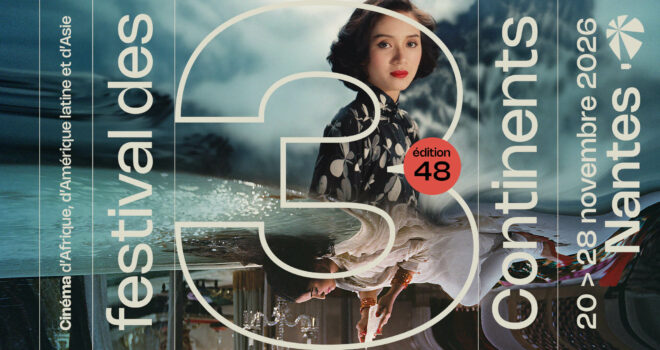
The Festival des 3 Continents is today unveiling the highlights of its 2026 programme and is putting 20 tickets at a preferential rate on sale.
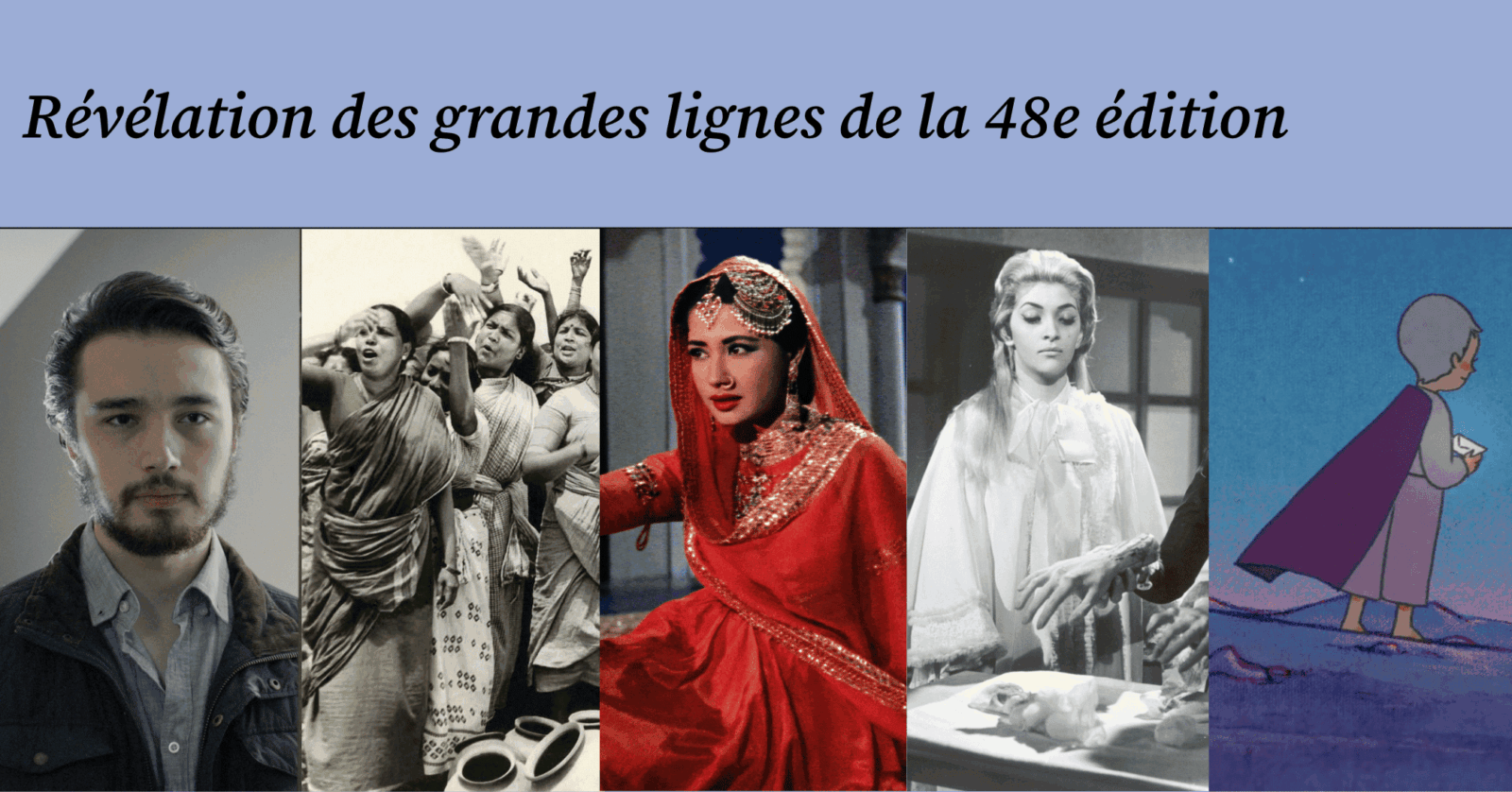
On the programme: films from the past year, including many never-before-seen in France; the first complete European retrospective of the work of Turkish filmmaker Zeki Demirkubuz; a retrospective dedicated to Kailasam Balachander, a leading figure in Tamil popular cinema; recently restored treasures; and a journey into the world of ghosts. A year dedicated to discovery and new releases.
From 20 to 28 November 2026, the films will be screened at the Katorza, the Concorde and the Cinématographe, as well as at partner cinemas across the department. This edition will also mark the last opportunity to see films in the historic Cinématographe auditorium before the opening of its new venue in December 2026.
Official Selection
Comprising an International Competition and Special Screenings, the Official Selection brings together films from the past year – recent feature-length films, both fiction and documentary – most of which are being screened for the first time in France. Four prizes will be awarded to films in the International Competition: the Montgolfière d’or et d’argent, the Prix du public, and the Prix du Jury jeune. The full selection will be announced on 29 October.
Zeki Demirkubuz, History in Hindsight (Türkiye)
A leading figure in contemporary Turkish cinema, Zeki Demirkubuz (born in 1964) will be the focus of a special event featuring the first-ever European screening of his complete filmography. From C Blok (1994) to Hayat (Life) (2023), this retrospective will take viewers on a journey through nearly thirty years of a body of work that explores human relationships, their contradictory fluctuations and power dynamics. From film to film, Demirkubuz observes characters grappling with jealousy, guilt, loneliness, money or self-sacrifice, in a body of work deeply rooted in Turkish society.
For this occasion, Zeki Demirkubuz will be a guest at the Festival des 3 Continents and will be in Nantes to attend this exceptional retrospective.
This complete retrospective thus offers a unique opportunity to appreciate the coherence of a body of work that has consistently explored the links between individual choice and destiny, whilst revealing a remarkable continuity in its themes.
Kailasam Balachander, Society in the spotlight (India)
Films made in Tamil, Telugu and Hindi – works that have left their mark on several generations of audiences and launched the careers of actors who have since become legendary, such as Kamal Haasan and Rajinikanth – yet the cinema of K. Balachander (1930–2014) remains largely unknown in Europe. The Festival des 3 Continents is dedicating an exceptional retrospective to him – the first of this scale in France and Europe – honouring this major filmmaker who directed over 90 films, some of which have been recently restored and will be screened in Nantes.
Balachander consistently used popular cinema as a platform for observing and engaging with the changing face of Indian society. Desire, women’s emancipation, family hierarchies and class differences run through a filmography that pushes the boundaries of Tamil cinema without ever losing sight of its appeal to the general public.
The past here and now (restored films)
From one country to another, across an ever-increasing number of regions, film restoration work is restoring access to whole swaths of our cultural heritage. Film libraries, foundations, national archives and rights holders are working to bring back films that have long been in a fragile state, inaccessible or missing from the big screen. The Festival des 3 Continents supports this movement with The Past in the Present, a programme dedicated to recently restored heritage films.
Some of these works are by renowned filmmakers, whilst others have remained on the fringes of the established narratives of film history. What they all have in common is that they are being brought back in a form that allows them to be seen once more, sometimes for the first time in several decades. From Brazil to Japan, via Iran and the Philippines, restoration is not merely an act of preservation: it brings these films back into circulation in the present day. The festival thus continues its mission to discover and share cinematic heritage: rediscovering films also means redefining the milestones of what we consider to be our history of cinema.
Thematic programme: The life of ghosts
Ghosts, the absent, the dead who linger in the memories of the living: The Life of Ghosts brings together films in which the ghost becomes a way of bringing back what refuses to
disappear. Here and there, in Tokyo, Dakar and Mexico City, filmmakers bring to light, in various forms, that which the present cannot quite keep at bay. Whether personal ghosts or those inherited from history, they blur the boundaries between reality and the imagination, between what has happened and what continues to haunt us.
Acclaimed works such as Hideo Nakata’s Dark Water, Mati Diop’s Atlantique and Hayao Miyazaki’s Spirited Away mark a journey in which ghosts are constantly changing in nature.
To find out more about the The Life of Ghosts programme:
Young Audience Films: First Steps Towards 3 Continents
First Steps Towards 3 Continents invites you to discover a selection of films aimed at children aged 3 and over and their families. Workshops exploring the art of the moving image are proposed following screenings on weekends and Wednesday during the festival. This selection for young audiences is also available to nursery and primary school classes in Nantes and the Loire-Atlantique region, accompanied by dedicated teaching resources.
The Paris screening of the International Competition winners will take place in
early 2027, in collaboration with the Jeu de Paume art centre and the Cinéma
du Panthéon.